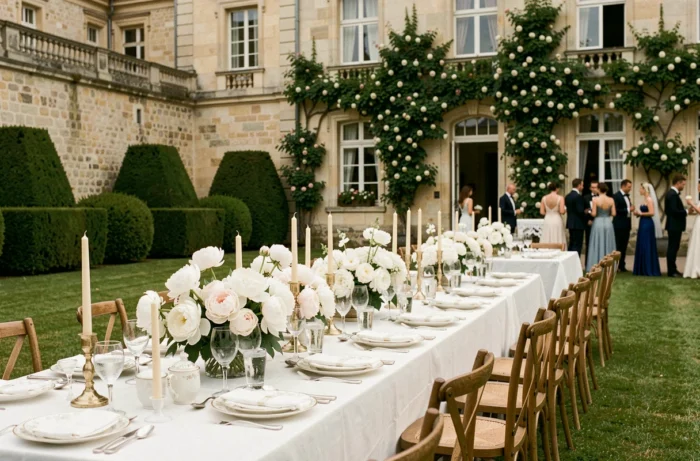
Searching for a wedding venue in Île-de-France means navigating through hundreds of estates, castles, and private properties. The choice of site influences the lighting of the photos, the flow of the day, and the comfort of the guests. Before falling under the charm of a façade, a few concrete criteria deserve to be put on the table.
On-site accommodation: the criterion that couples underestimate
The trend of multi-day weddings has significantly strengthened in recent years. Outdoor ceremonies, extended dinners, next-day brunches: this format requires accommodating some guests directly on the estate.
An estate with integrated gîtes or rooms radically changes the organization. No need to coordinate shuttles or book a block of hotel rooms nearby. Guests stay together, and the rhythm of the celebration no longer depends on taxi schedules.
Have you noticed that the most relaxed weddings are often those where no one checks their watch? On-site accommodation removes time constraints and frees up the evening. In Seine-et-Marne or Yvelines, several estates offer this format, with capacities ranging from a few rooms to several dozen beds.
To find a wedding venue in Île-de-France suitable for this type of celebration, it’s better to filter from the start based on the presence of integrated accommodation rather than adding it as a secondary option.
Noise disturbances and regulations: what limits the party in Île-de-France
A sumptuous park, an orangery opening onto a garden, a dance party until dawn. The picture is enticing, but regulations on noise disturbances in residential areas can put a stop to it.
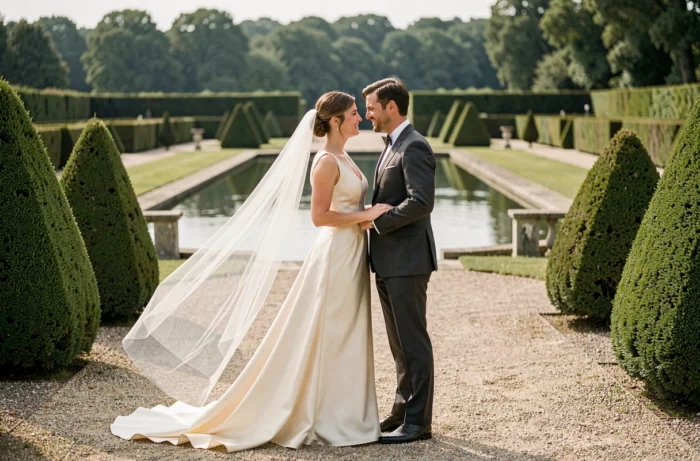
Amplified music outdoors is subject to strict constraints, especially in suburban municipalities where neighbor density is high. Some estates impose a noise curfew, sometimes as early as 11 PM, or prohibit outdoor speakers after a certain hour.
Why is this point so crucial? Because it conditions the actual flow of the evening. An estate located in an isolated agricultural zone (south of Seine-et-Marne, north of Val-d’Oise) offers much more leeway than a property on the edge of a village.
Before signing, ask the venue manager three questions:
- Is there a municipal order limiting noise after a specific hour, and is the estate subject to it?
- Does the reception hall have acoustic insulation allowing the party to continue with the doors closed?
- Has the estate ever received neighborhood complaints during previous weddings?
These answers are worth more than a beautiful photo gallery on the provider’s website.
Estates with a strong identity: castle, vineyard, or renovated farm
French couples now prefer venues with a unique identity rather than versatile reception halls. A Renaissance castle in Yvelines, a restored farmhouse in Seine-et-Marne, or a vineyard in southern Île-de-France tell different stories.
The venue should extend the couple’s narrative, not just host tables. This is what distinguishes a memorable wedding from a successful reception. A vineyard, for example, provides a coherent setting for a wedding centered around gastronomy and wine, with naturally photogenic outdoor spaces.
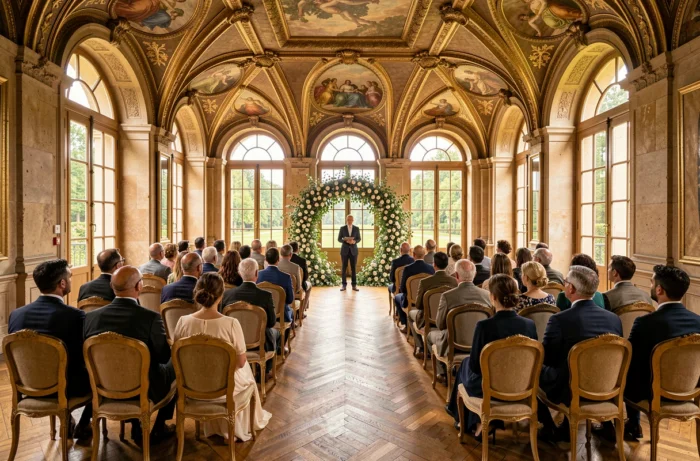
Castles remain a safe bet in Île-de-France, but their diversity is greater than one might think. Some offer a very structured French park, ideal for outdoor secular ceremonies. Others focus on a wilder setting, with woodlands, a pond, or a riding path that creates varied photographic atmospheres.
Renovated farms and barns, often located in Marne or Yvelines, attract couples who want a countryside setting without leaving the Paris region. The rustic charm of a rehabilitated barn does not necessarily mean a reduced budget: recent renovations often include high-end amenities (equipped catering kitchen, architectural lighting, designer furniture).
Fluidity of spaces: ceremony, cocktail, and reception without interruption
A good wedding venue is also judged by how guests move between the different moments of the day. The ceremony, cocktail, and dinner should flow seamlessly without guests having to get into a car or cross a parking lot.
A well-designed venue offers at least three distinct spaces accessible on foot: one for the ceremony (garden, courtyard, chapel), one for the cocktail (terrace, shaded park), and one for the meal and dance party (indoor reception hall).
Why does this criterion matter so much? Because every group movement breaks the rhythm. Photographers know it: the best spontaneous shots happen during smooth transitions, when guests naturally wander from one space to another.
- Check the actual distance between each space during the visit, stopwatch in hand
- Ask for a rain plan B for each moment (ceremony, cocktail): a simple marquee is not always enough
- Test the natural light of indoor rooms in the late afternoon, the time when most cocktails begin
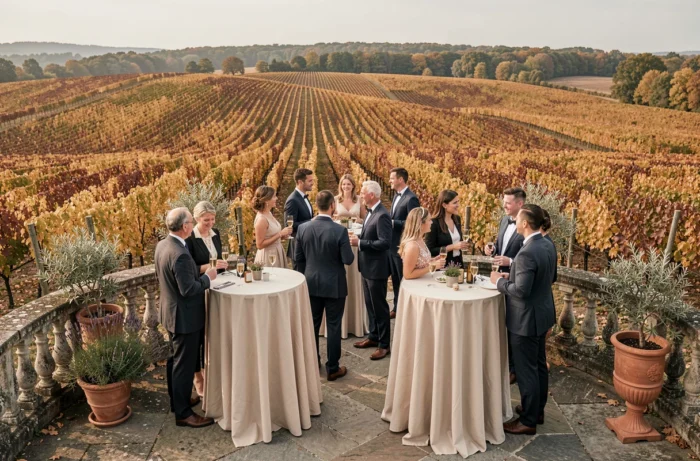
A venue that ticks all the aesthetic boxes but requires shuttles between the ceremony and dinner will lose its conviviality. The proximity of spaces matters as much as their beauty.
Ultimately, the choice of a wedding venue in Île-de-France rests on a balance between setting, logistics, and local regulations. A beautiful place with a curfew at 10 PM or without a credible rain plan can turn the day into a source of stress. It’s better to choose a slightly less spectacular venue that is perfectly suited to the actual flow of a wedding.