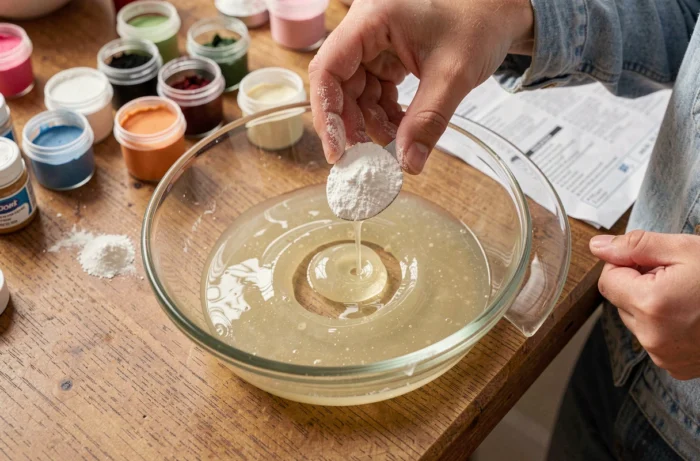
A slime that flows between the fingers instead of stretching properly presents a chemistry problem before it becomes a recipe issue. The consistency of a slime depends on the balance between a polymer (the glue) and a crosslinking agent (borax, saline solution, liquid laundry detergent) that creates bridges between molecular chains. When this balance tips towards the liquid side, the texture collapses. Understanding this mechanism allows for the selection of the right corrective measure rather than randomly piling on additions.
Chemical safety of slime: what regulations change for homemade recipes
Discussions around slime now go beyond just the texture issue. Ongoing work at the European level regarding toy safety is expanding chemical monitoring to aqueous materials, a category that directly includes slimes and sensory doughs. The preservative BIT (benzisothiazolinone), found in certain commercial white glues and liquid dyes, is now subject to stricter control requirements for these products.
Fragranced slimes are also affected. Substances like Lilial (BMHCA), a fragrance compound classified as reprotoxic, are now included among the extended restrictions on toys. Specifically, DIY kits and fragranced slimes for children are directly targeted by these new compliance rules. For a homemade recipe, this means it’s better to avoid dyes and fragrances whose detailed composition is not readable on the packaging.
Field feedback on slime-type products no longer only concerns texture but also incidents related to ingredient safety. This point conditions the very choice of products used to thicken or correct a failed slime.
Role of the crosslinking agent in slime texture
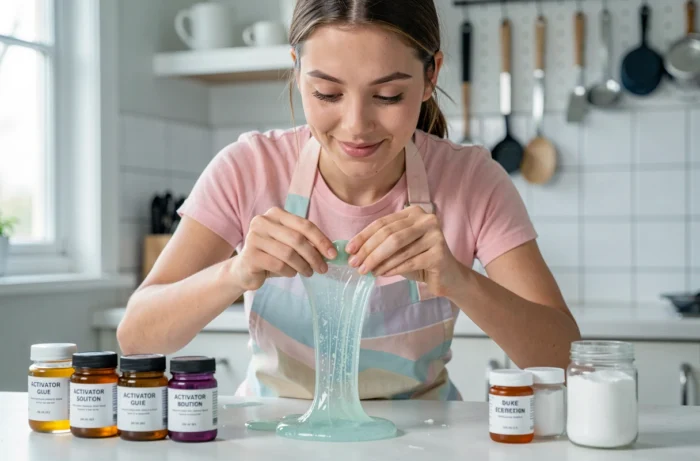
Before adding anything to a too-liquid slime, it is essential to identify what is lacking. The problem almost always comes from a deficit in the crosslinking agent, not an excess of water. The glue (PVA or clear glue) forms polymer chains that remain fluid as long as they are not linked together. It is the crosslinker that creates these bonds and gives the slime its ability to stretch without flowing.
In a classic recipe based on glue and liquid laundry detergent, the boron contained in the detergent plays this role. If the dosage is too low, the slime remains viscous. Adding more glue at this stage worsens the problem, as it increases the amount of free polymer without strengthening the molecular bridges. Among the solutions for a too-liquid slime, the first is therefore to reintroduce the crosslinking agent in micro-doses rather than modifying the base.
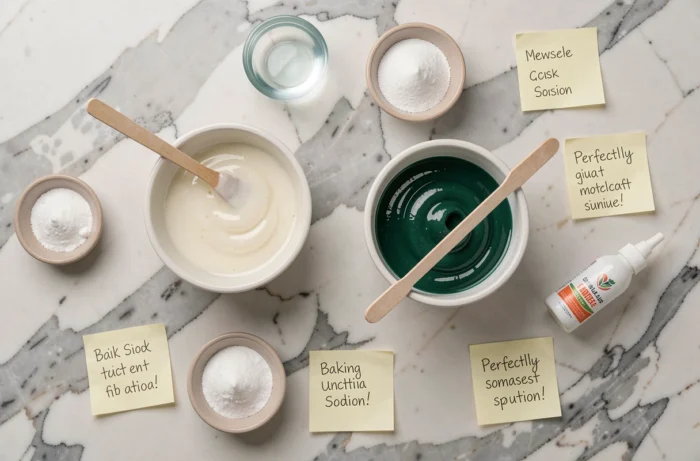
For recipes based on saline solution (water plus baking soda plus contact lens solution), the mechanism is the same: it is the boric acid contained in the contact lens solution that activates the crosslinking. A liquid slime in this case often means that the contact lens solution used does not contain enough boric acid, or that the baking soda has been forgotten.
Thickening a slime according to the type of recipe used
The corrective measure entirely depends on the original recipe. An effective addition in a PVA glue-based recipe may be unnecessary or even counterproductive in a recipe without borax.
Glue and liquid laundry detergent slime
Add the detergent by half a teaspoon. Mix for at least two minutes between each addition. The slime may take several minutes to react after incorporating the crosslinker, and adding too quickly produces a hard and brittle slime, the opposite excess.
Saline solution slime
First, check that your contact lens solution contains boric acid (this is indicated on the label). If so, add a pinch of baking soda, then a few drops of saline solution. The baking soda activates the reaction with the boric acid.
Slime without borax or glue
Recipes based on cornstarch and water work differently: they produce a non-Newtonian fluid, not a true crosslinked slime. To thicken this type of dough, the only variable is the cornstarch/liquid ratio.
- Add cornstarch by the tablespoon, kneading by hand between each addition, until you achieve a dough that resists pressure but flows when released.
- If the recipe uses shower gel or toothpaste as a base, incorporate cornstarch gradually, but accept that the final texture will always be softer than a glue-based slime.
- For shaving cream-based slimes, the volume of cream acts as a thickener. Reincorporate cream in small amounts and mix thoroughly.
Correction mistakes that worsen a liquid slime
Adding hot water to “soften and start over” is a common reflex that further dilutes the existing crosslinker. Water is the main enemy of an already too-liquid slime. Even a small amount can tip the balance.
The massive addition of glue is another trap. More glue means more polymer to crosslink, which in turn requires more crosslinker. This leads to a cycle of additions that increases the volume without improving the texture. However, if the slime has dried out and lost its elasticity, a few drops of body lotion can restore flexibility without affecting the hold.
Kneading the slime for a long time is also part of the process. A slime that seems liquid just after the addition of the crosslinker can reach the right consistency after five to ten minutes of kneading. Patience is as important as dosage in correcting a failed slime.
Storage and degradation of texture over time
A properly dosed slime can become liquid again after a few days of storage. Exposure to air causes the evaporation of the water contained in the glue, but also the gradual degradation of the crosslinking bridges. Storing the slime in an airtight container slows down this process.
- A glass or plastic jar with a screw lid keeps the texture longer than a plastic bag, which allows moisture to pass through.
- Placing the slime in the refrigerator can extend its lifespan by a few days, especially for cornstarch-based recipes.
- If the slime develops an odor or mold, it must be discarded. Homemade recipes without preservatives have a limited lifespan, a point reinforced by regulatory concerns surrounding the BIT preservative in aqueous materials.
The perfect texture of a slime is a temporary state. Homemade recipes without preservatives degrade within a few days, and starting a new batch with an adjusted dosage yields better results than trying to indefinitely prolong an aging slime.