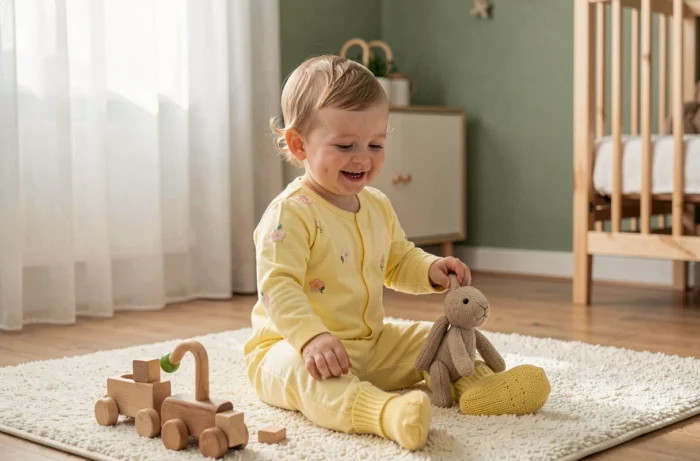
A too-large cotton bodysuit, pajamas with a zipper that gets stuck at every change, an adorable onesie that’s impossible to put on: dressing a baby daily quickly confronts the limits of aesthetics. The real challenge is to find clothes that respect the fragile skin of the infant, facilitate the repetitive motions of changing, and allow for a bit of style without sacrificing comfort.
Baby Clothing Safety: EN 14682 Standard and Prohibited Cords
Before discussing colors or cuts, a safety point deserves the full attention of parents. The European standard EN 14682 strictly regulates the presence of cords on children’s clothing. For babies and children up to 7 years old, cords at the head and neck level are prohibited. This rule aims to prevent the risks of strangulation and entanglement.
In practical terms, this means that a hood with a drawstring or a collar adjustable by a tie has no place in an infant’s wardrobe. Also check for functional cords on the rest of the garment: they must be short, non-detachable, and not protrude from the garment when worn.
Since December 13, 2024, the European GPSR regulation further strengthens safety, traceability, and information requirements for products sold in the EU, including baby clothing. Brands selling in Europe must provide clear information about the compliance of their products. A garment that meets standards protects just as much as an expensive garment.
Materials and Fabrics Suitable for an Infant’s Skin
A baby’s skin is significantly thinner than that of an adult. It absorbs more substances upon contact and reacts more quickly to friction. Therefore, the choice of fabric is not just a matter of softness to the touch.
Cotton remains the reference material for newborn clothing and the first months. Breathable, absorbent, and washable at high temperatures, it withstands repeated machine cycles well. For parents who want to go further, certified organic cotton guarantees the absence of residual pesticides and aggressive chemical treatments on the fiber.
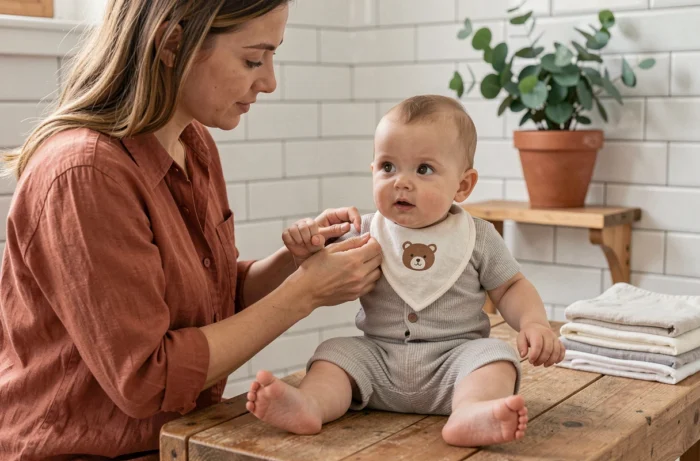
Have you ever noticed that some bodysuits seem softer after several washes? This is often a sign of good quality cotton whose fibers relax without degrading. Conversely, a cheap synthetic fabric can irritate the folds of the neck or thighs within the first hours of wear. Browsing the baby section on Les Bébés Fringueurs allows you to find pieces that combine quality materials and cuts designed for everyday use.
Beyond cotton, some brands offer blends with bamboo or modal. These materials have good absorption capacity and a silky feel, but ensure that the manufacturing process remains transparent. A recognized textile label is better than vague marketing claims.
Cuts and Closures: Dressing Baby Without a Struggle
The comfort of baby clothing is just as important for putting it on as it is for wearing it. A parent changes their infant several times a day. Every second saved during dressing counts, especially at 3 a.m.
Preferred Closures for Changing
- Snap buttons at the crotch allow for opening the bodysuit or pajamas without completely undressing the baby, which limits cooling and fussiness
- Front zippers, from the collar to the foot, transform dressing into a single, quick motion, ideal for night pajamas
- American necklines (crossed at the shoulders) widen the bodysuit opening to pass the head without forcing on the face or ears
An easy-to-put-on garment reduces stress for both the baby and the parent. Closure systems at the back, classic buttons to sew, or overly tight collars unnecessarily complicate each change.
Sleeves and Cut: Allowing Baby to Move
Raglan sleeves (stitched diagonally from the neckline) offer more room for the arms than a classic straight sleeve. For a baby starting to grab objects or roll over, this freedom of movement makes a real difference.
In terms of size, it’s better to have a slightly loose garment than a fitted model. The diaper adds volume, and a bodysuit that is too tight compresses the stomach after meals. Always allow for some margin, without going to the other extreme: an overly large pajama creates fabric folds that can be bothersome during sleep.
Dressing Baby for Sleep: The Garment Replaces the Blanket
Current sleep safety recommendations emphasize one point: no loose blanket in a baby’s crib. The night garment thus becomes the main tool for thermal regulation.
The sleeping bag (or swaddle) is the recommended alternative. It wraps the baby without the risk of covering their face. Its TOG rating indicates its warmth level: the higher the TOG, the warmer the sleeping bag.
- In mild weather, a short-sleeved bodysuit under a light sleeping bag is usually sufficient
- In winter, a thick cotton pajama paired with a higher TOG sleeping bag ensures a stable temperature
- Watch for signs of overheating (moist nape, red cheeks) rather than cold hands, which can often be misleading in an infant
Touching the baby’s nape remains the most reliable gesture to assess whether they are too hot or too cold. A warm and dry nape indicates appropriate dressing.
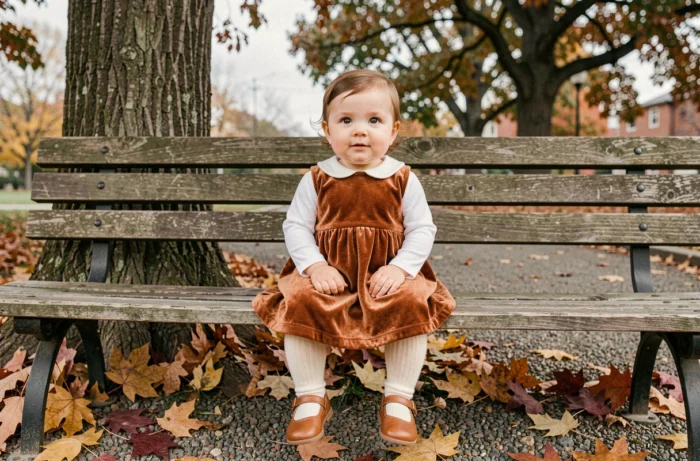
Everyday Style: A Few Guidelines to Avoid Choosing Between Beauty and Practicality
Dressing a baby stylishly does not require an unlimited budget or a full wardrobe. A few basic pieces in neutral tones (ecru, heather gray, beige) can easily be combined with one or two more colorful or patterned items.
A tip that avoids many unnecessary purchases: focus the budget on the most worn pieces (bodysuits, pajamas, sleeping bags) and reserve dressier outfits for special occasions. A three-month-old baby will wear a bodysuit almost every day, but a linen overall will only be used a few times before it becomes too small.
Babies grow quickly, often faster than expected. Buying one size up for seasonal clothing is rarely a bad idea, as long as you ensure that the cut remains compatible with the diaper and that the sleeves do not hinder grasping.
The ideal garment for a baby meets three criteria: a soft and safe material, a cut that facilitates changing, and a style that pleases parents without compromising the first two points. Everything else is secondary.