
Finding the right page on a community website can quickly turn into a puzzle. Administrative sections, forms, local news: content accumulates over the months. For the Pays d’Apt Luberon Community of Communes (CCPAL) portal, a simple tool allows users to navigate effortlessly: the site map, also known as the sitemap.
Sitemap of a community: what is this page for?
Have you ever searched for a form on an institutional website without knowing which section it was hiding in? The sitemap addresses this problem. It displays, on a single page, the complete list of all sections and subpages of the portal.
In practical terms, it’s a clickable summary. Each link leads directly to the corresponding page, without going through dropdown menus or the internal search engine. For a site as dense as that of the CCPAL, which covers drinking water, sanitation, local economy, public procurement, culture, and even the tourist tax, this shortcut saves considerable time.
By consulting the sitemap at www.cc-paysapt.fr, you can access this overview with a single click. The structure replicates the portal’s organization: major competencies first, followed by detailed sub-sections.
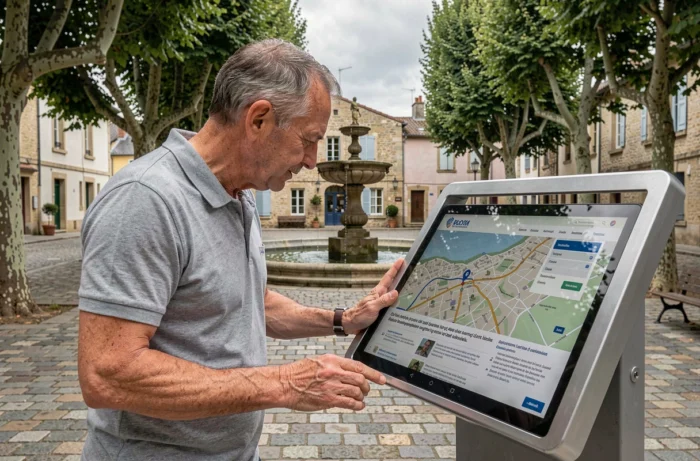
Key sections of the CCPAL portal accessible from the sitemap
Not all sections are equally relevant depending on your needs. Here are the most consulted categories and what they contain.
Drinking water and sanitation
The CCPAL directly manages the water network of several municipalities in the Pays d’Apt. For others, such as Bonnieux, Gargas, Goult, Joucas, Lacoste, Lioux, Ménerbes, Murs, Roussillon, Saint-Pantaléon, Saint-Saturnin-lès-Apt, and Villars, SUEZ is responsible for managing the network. This distinction is crucial: a resident of Roussillon looking to contact the water service from the sitemap should direct their inquiry to SUEZ, not to the CCPAL service.
The water subscriber portal now allows users to view their bills, manage their contracts, and update their contact information online. This recent feature complements the descriptive pages referenced by the sitemap.
Administrative procedures and forms
The sitemap lists pages for grant applications, online payments, and public procurement. Beware of a common pitfall: the presence of a downloadable form does not mean that the process is fully digitized. Some procedures still require postal submission or a visit to the town hall.
Governance and local news
The agendas of the bureau and community council, notices of water cuts, and public inquiries are among the content that is regularly updated. The sitemap can point to these pages, but their content changes frequently.
- Agendas of the community council: published before each session, detailing the planned deliberations.
- Notices of water cuts: localized information by municipality, to be checked before construction work or a move.
- Public inquiries: consultations open to residents, with deadlines for participation.

Navigation via the sitemap or the menu: when to use each method
The main menu of the CCPAL site organizes content by major themes: Governance of the territory, Procedures and services, Economy and employment, Planning, Sustainable development, Discover and go out. This structure works well when you already know which category to search in.
The sitemap becomes more effective in three specific situations:
- You are looking for a page whose approximate name you know, but not the parent section. A Ctrl+F (search in the page) on the sitemap locates the link in seconds.
- You want to compare the sub-sections of two different themes without navigating from one menu to another.
- You are discovering the site for the first time and want to understand the extent of the community’s competencies.
The sitemap does not replace the search engine for recent news. Temporary content (occasional notices, past events) is not always indexed in the sitemap. To find a notice of a water cut published the day before, the internal search remains more reliable.
Digital accessibility of the sitemap: a often overlooked criterion
A well-structured sitemap also benefits people using assistive technologies (screen readers, keyboard navigation). The French reference for digital accessibility is the RGAA, which imposes a measurable level of compliance on public sites.
For a sitemap, the points of vigilance are concrete:
Each link must have an explicit title, not just a simple “click here.” A screen reader reads links in isolation. “Drinking water – rates and contracts” is understandable out of context, “Learn more” is not.
The hierarchy of titles on the page must reflect the site’s structure. If the sitemap uses consistent heading levels, a keyboard user can jump from section to section without going through each link one by one.
The accessibility of a public sitemap conditions access to administrative procedures for some residents. This is not a technical detail reserved for developers.

Practical limits of a local authority sitemap
The sitemap reflects the structure of the portal at a given moment. When the CCPAL adds a new page (a call for projects, a public consultation), it does not always appear immediately in the sitemap if the update is not automated.
Archived content poses another problem. An old agenda or an expired notice of a water cut may still appear in the sitemap without a date mentioned. Always check the publication date on the destination page before relying on the information.
Despite these limitations, the sitemap remains the fastest way to visualize all the services offered by the CCPAL online, from paying water bills to consulting public procurement. For residents of the Pays d’Apt Luberon who carry out their procedures from their computer or phone, it is a point of entry to bookmark.