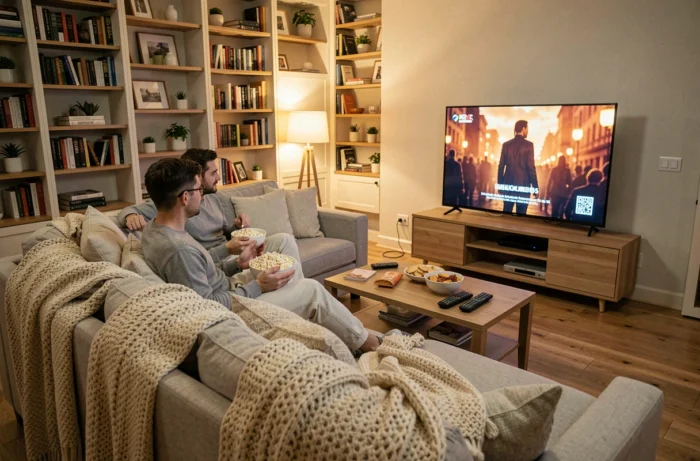
We’ve all experienced that moment: the movie starts, but the reflection of the hallway lamp blocks the screen, the sound crackles in the highs, and the blanket has disappeared under the couch. A failed TV night rarely comes down to the chosen program. It hinges on three or four practical details that we overlook out of habit.
Linear or streaming: crafting your TV program without wasting twenty minutes
The first trap of a TV night is the time spent searching for something to watch. With the proliferation of platforms, we sometimes scroll longer than we actually watch. According to data published by TV.fr in August 2026, 49% of French people first open a SVOD platform to choose a series, compared to 45% who start with free channels.
In practice, we save time by deciding before we sit down. If we have guests for a match or a live show, the TNT remains the logical reflex. For a series marathon with family or friends, we go directly to the platform hosting the desired content.
Hybridization works very well too: a news broadcast or a live match, then an on-demand series right after. This is actually a trend documented by TV.fr, which notes that users seamlessly switch between linear and streaming without seeing any contradiction. To prepare this combo, we can rely on the tips from Influence News to structure our evening even before turning on the screen.
Sound and light settings for a cinema atmosphere at home
We invest in a large screen, but we forget that poorly placed lighting sabotages the image more surely than a bad resolution. The first useful action: turn off any light source facing the screen or on the sides. Direct reflections strain the eyes and crush contrasts.
Next, we add indirect lighting behind the television, such as a LED strip or a lamp directed towards the wall. This soft light reduces eye strain caused by the contrast between the bright screen and a completely dark room.
Sound, the blind spot of most setups
The built-in speakers of flat-screen TVs are thin, facing backward or downward. The result: inaudible dialogues, non-existent bass. A soundbar positioned under the screen corrects the problem for a reasonable budget.
- Place the soundbar at ear level when seated, never on the floor or on a high shelf
- Activate the “dialogue” or “voice” mode if the soundbar offers it, for films where the music drowns out the lines
- Avoid placing the speakers against a back wall: the bass becomes muddy and resonates in the room
Feedback varies on this point, but a simple test with a film clip rich in dialogue and action allows for setting the right balance before the evening.
Meal platter and snacks for a movie night without leaving the couch
We often underestimate the impact of the TV platter on the actual comfort of the evening. Getting up three times to fetch glasses, a board, a knife breaks the rhythm just as much as a poorly timed commercial break.
Preparing a complete platter before starting the program makes all the difference. We’re talking about a real self-sufficient platter, not a bowl of chips precariously balanced on the armrest.
Creating a TV platter that lasts
For a two-hour film or a sequence of three episodes, you need recipes that can be nibbled without cutlery and that don’t cool down.
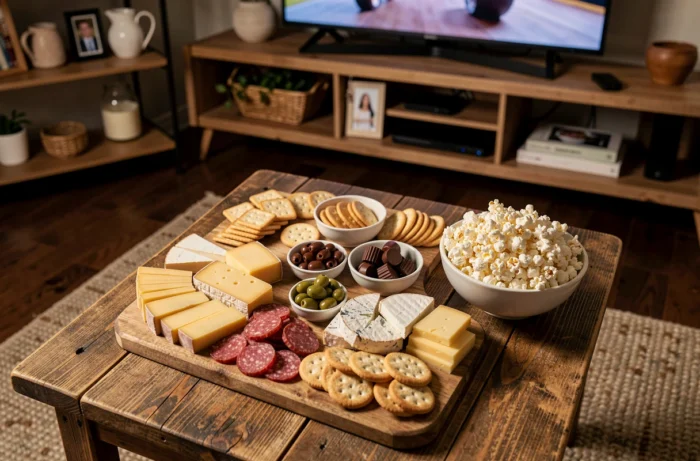
- Savory base: cheese cut into cubes, cold cuts, crackers or breadsticks. Firm cheese holds up better at room temperature than a camembert that melts after twenty minutes
- Sweet base: dried fruits, dark chocolate squares, homemade cookies. Nothing that melts or sticks to fingers
- Ready drinks: fill a carafe or prepare glasses in advance to avoid back-and-forth trips to the kitchen
- A roll of paper towels or napkins within reach, because we eat with our fingers on a couch

Family TV night with kids: adapting the format without frustration
When organizing a movie night with children, the choice of format matters more than the choice of film. A two-hour feature often exceeds the attention span of the youngest. You end up with a child who loses interest after forty-five minutes, asks for something else, and the evening derails.
It’s better to go for two episodes of an adventure or animated series (Disney, for example) rather than forcing a full movie. The natural break between episodes allows for a pause, a trip to the bathroom, and a reload of the platter.
The double screen trap
With children as with adults, phones placed on the coffee table fragment attention. We think we’re watching together, but everyone is scrolling between scenes. A simple action: stack the phones on a distant piece of furniture during the viewing. No one misses an urgent message in two hours, and the collective experience benefits greatly.
The threshold of 45 daily minutes of SVOD has been crossed in France according to TV.fr. When this time is combined with everyday screens, the family TV night benefits from remaining a defined moment, with a clear start and end, rather than a continuous flow that stretches until bedtime.
A good TV night at home relies on concrete elements: a program decided before sitting down, lighting that doesn’t interfere, properly adjusted sound, and a ready meal platter. The rest is up to the couch and the blanket.