The exposed granite, colorful shutters, and slate roofs form an architectural vocabulary that is immediately associated with Brittany. Decorating a house in this spirit is not limited to putting marine stripes on a cushion. Breton buildings, often old, impose technical constraints that condition every decorative choice, from wall coverings to the outdoor color palette.
Humidity and ventilation: the diagnosis before Breton decoration
Old Breton houses operate on a principle of breathable walls. Granite, schist, or sandstone walls allow moisture to migrate outside, provided that nothing blocks this transfer. Applying a waterproof decorative coating or installing interior insulation without addressing ventilation amounts to trapping water in the masonry.
Renovation professionals in Brittany recommend addressing the roof, joinery, ventilation, and humidity simultaneously before considering any decorative finish. A living room with stone walls beautifully highlighted by careful lighting will lose all its charm if rising damp degrades the joints in just a few seasons.
On the home section of Terre de Breizh, you can find objects and accessories designed for interiors that embrace this regional identity, from furniture to textiles.
The choice of mortar determines the durability of the wall decor. For old walls, cement repointing can retain moisture and cause stone spalling. Lime repairs, compatible with the breathable function of the building, preserve both the aesthetics of the exposed wall and its ability to regulate humidity. Checking the nature of the stone and the condition of the joints remains a prerequisite for any decorative enhancement of an interior wall.
Exposed stone and raw wood: materials for a coherent Breton interior
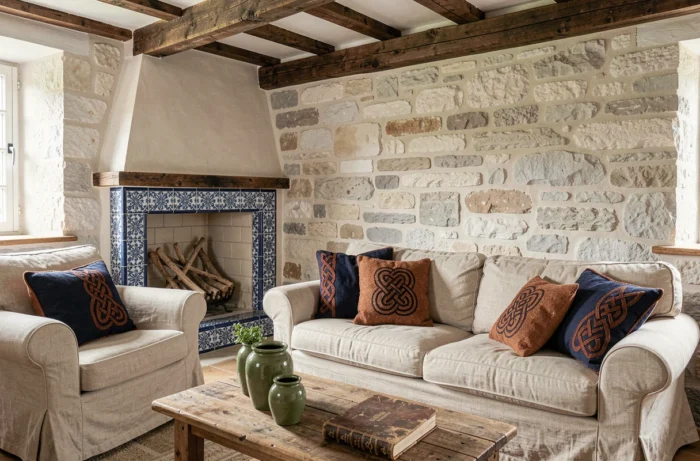
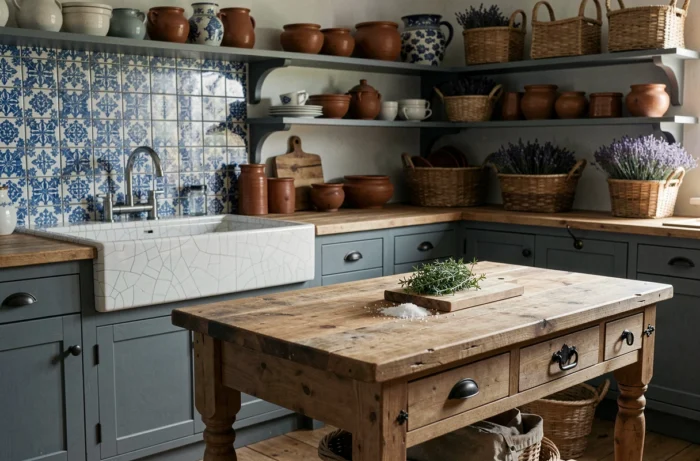
Stone is the signature material of Breton houses. Gray or pink granite, dark schist, ochre sandstone: each geographical area has its own mineral palette. Leaving an exposed stone wall in a living space immediately anchors the interior in its regional context.
Wood complements this mineral base. Traditional Breton frameworks, often visible in attic rooms, provide a strong visual structure. Exposed oak or chestnut beams do not need to be painted to create their effect. A simple protective treatment is enough to enhance them.
Combining stone and contemporary furniture
A common mistake is to furnish a stone interior with rustic furniture, creating a museum-like effect. A granite wall pairs very well with a sleek sofa or a black metal table. The contrast between the roughness of the stone and the clarity of contemporary design produces a more vibrant result than an entirely “old” decor.
Textiles play a binding role. Linen, a fiber historically grown in Brittany, adds softness without distorting the atmosphere. Natural linen curtains, a cream wool throw, and a few cushions in muted tones (slate blue, grey-green, off-white) are enough to warm a room dominated by stone.
Outdoor color palette: between tradition and local regulations
Breton facades are recognized by their shutters painted in deep blues, Basque reds, or fir greens. These colors are not solely a matter of aesthetic tradition. Changing the color, coating, or cladding of a facade may require prior declaration to the town hall, depending on the provisions of the local urban plan (PLU) or the intercommunal urban plan (PLUi).
Constraints are heightened in protected areas. Near a historic monument, in an inscribed or classified site, the Architects of the Buildings of France (ABF) may impose specific shades or prohibit certain facade materials. Consulting the town hall’s urban planning department before repainting shutters may seem trivial, but it avoids administrative disputes.
- Check the local PLU to know the authorized shades for joinery and facades
- Identify if the property is located within a protected perimeter (historic monument, classified or inscribed site)
- Prefer microporous paints on exterior woodwork to allow the wood to breathe under the humid Breton climate
- Request a prior declaration of works if the change modifies the exterior appearance of the building
Breton interior decoration: going beyond seaside clichés
The majority of decor content associates Brittany with marine stripes, decorative anchors, and model sailboats. This register exists, but it represents only a fraction of the Breton visual identity. The Breton style also draws from a much broader Celtic, agricultural, and textile heritage.
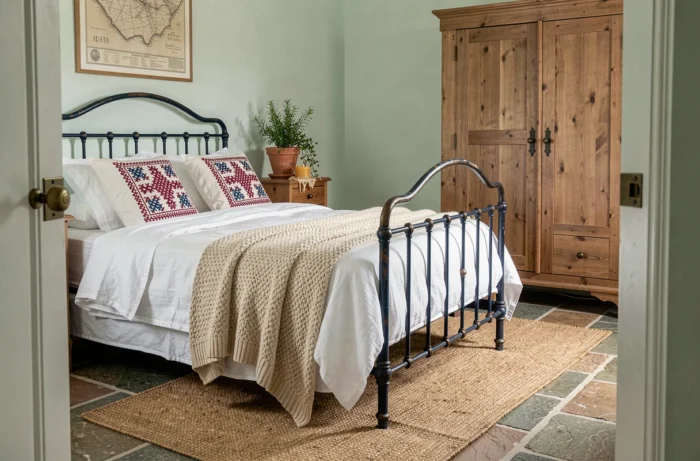
The faience of Quimper, with its hand-painted figurative motifs, can serve as a starting point for a decorative palette. Bigouden embroidery, transposed onto cushions or placemats, introduces complex geometric patterns without resorting to systematic navy blue.
Three decorative directions that work
- Raw mineral: stone walls, slate or terracotta floors, light wood furniture. Color arrives in small textile touches. The overall effect remains sober and lets the building express itself
- Contemporary maritime: blue remains present but in deep shades (Prussian blue, indigo), combined with pure white and natural materials (rattan, linen, rope). Avoid overly literal seaside accessories
- Graphic Breton: reinterpreted ermine patterns, Breton typography on posters, a black and white palette enhanced with mustard yellow or earth red. A style that borrows from graphic design rather than classic decoration
The choice between these directions depends as much on the architecture of the place as on personal tastes. A longère with exposed beams lends itself more to the mineral register. An apartment in downtown Brest or Rennes can adopt the graphic path without contradiction.
A successful Breton interior relies on the balance between the existing building and decorative choices. Addressing humidity, respecting original materials, and checking regulatory constraints for the exterior: these technical steps, less photogenic than a mood board on social media, condition the durability of any decoration project in Brittany.