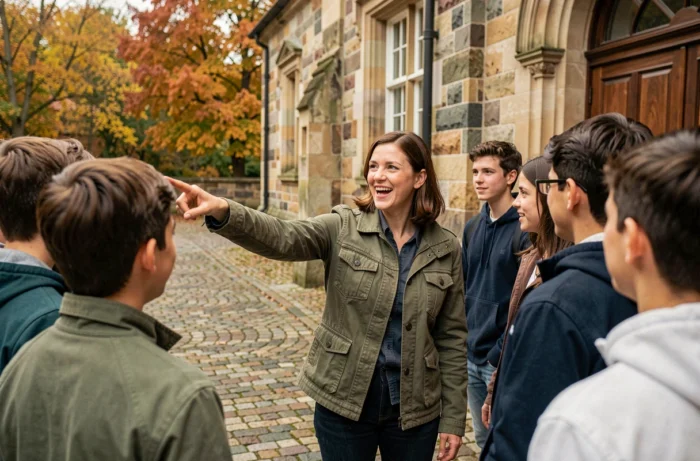
When organizing a discovery class, the question of funding and educational logistics arises quickly. But even before finalizing the transport budget, it’s essential to form a reliable supervisory team. Finding the right profiles, understanding what is truly expected from a facilitator on the ground, and knowing the regulatory obligations: this is the foundation of any successful school trip.
Honorability Check and BAFA: What Recruitment Really Requires
It is often thought that having a BAFA is sufficient to supervise students in a discovery class. The administrative reality is more complex. The honorability check is a distinct step from the diploma: the organizer declares each team member to the administration, which verifies the absence of any incapacity to work with minors. This verification particularly concerns the criminal record bulletin No. 2 and the judicial file of perpetrators of sexual or violent offenses (FIJAISV).
A valid BAFA does not guarantee the authorization to work if the honorability check reveals an incapacity. For recruiters and candidates alike, this distinction changes the game: it is not enough to simply tick the diploma box.
Another lesser-known point: some recent job offers accept candidates whose BAFA training is still ongoing. The PSC1 (prevention and civic rescue) or the SST (workplace first aid) represent additional assets that strengthen a candidate’s application. These opportunities can be found on Partir en Classe, which centralizes positions related to school trips with explicit selection criteria.
Facilitator in a Discovery Class: The Reality of the Position on a Daily Basis
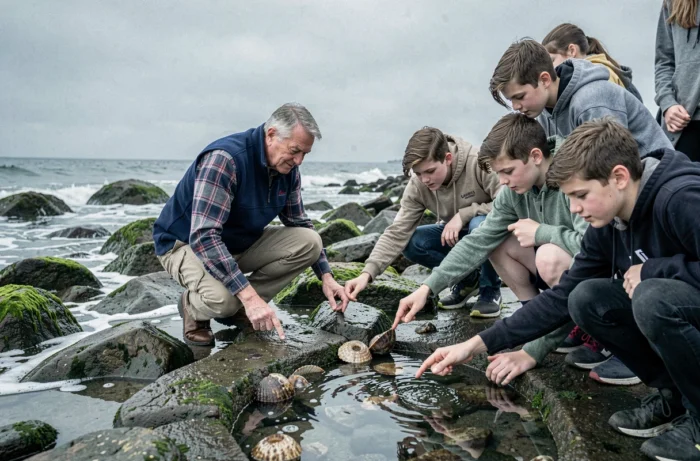
Classic job descriptions mention leading sports or cultural activities. In practice, the work covers much more than just activity slots. The facilitator ensures a presence throughout the entire day, from waking up to bedtime, including meals, hygiene, tidying up, evening activities, and the safety of the students.
This constant oversight requires physical and relational endurance that generic job postings do not always describe. The pace is intense: long days are strung together with little real downtime, in a collective environment where vigilance never ceases.
Skills Sought Beyond Animation
Organizations recruiting for discovery classes value profiles capable of managing the daily life of a group of children, not just leading a nature workshop or a treasure hunt. Specifically, here is what is expected:
- Enforce collective living rules (schedules, tidiness, politeness) firmly and kindly, even when dealing with students with behavioral difficulties
- Ensure safety at all times, whether during a bus transfer, supervised swimming, or a forest excursion
- Communicate with the educational team and teachers to adapt the program to the group’s needs, sometimes during the trip
- Manage minor emergency situations (injuries, anxiety attacks, homesickness) without panicking the rest of the group
Feedback varies on this point, but most experienced facilitators confirm that managing daily life takes more time than the animation itself.
Educational Engagement Contract: Compensation and Legal Framework
The educational engagement contract (CEE) is the usual legal framework for animation positions in school trips and camps. This contract deviates from standard labor law in several respects, particularly regarding rest periods and minimum compensation.
The daily compensation of the CEE is regulated by decree and remains significantly lower than what would result from a calculation based on the hourly minimum wage. The benefit in kind (accommodation and meals at the trip location) is included in the calculation, which reduces the cash component.
For a student or someone in career transition, understanding this framework avoids unpleasant surprises. One does not negotiate a CEE like a standard fixed-term contract. Rights to compensatory rest exist, but their practical application depends on the organization of the trip.
Coordination Positions: A Step Up
Beyond animation, there are coordinator positions for trips within local public services or specialized associations. These jobs involve the complete logistical management of the trip, communication with families and service providers, as well as regulatory follow-up of declarations with the SDJES (departmental service for youth, engagement, and sports).
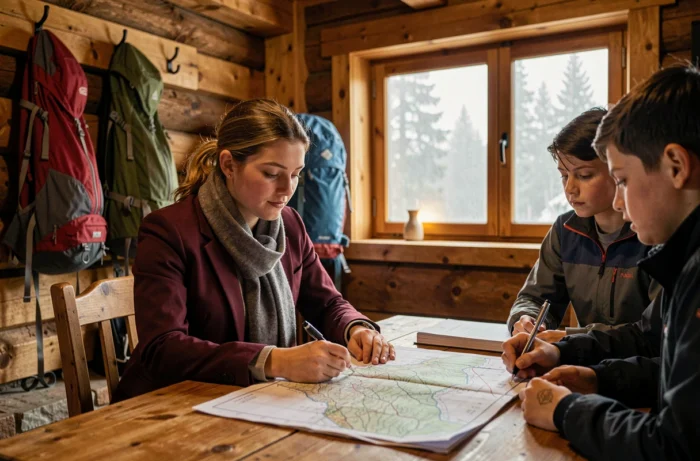
A coordination position requires prior field experience in animation or group supervision. Job postings generally mention a BAFD (certificate of aptitude for director functions) or an equivalent diploma in the field of professional animation.
Job Search Platforms Specialized in School Animation
Job offers related to discovery classes are not all found on the same channels. Generalist portals (France Travail, Indeed) list some of the announcements, but platforms specialized in animation group more targeted offers.
- Planet’anim, a portal dedicated to animation professions, offers a search engine filtered by job type (animator, director, multi-skilled BAFA employee)
- The websites of trip organizations (UCPA, Cap Monde, and local associative structures) publish their recruitments directly, often with precise seasonal calendars
- Municipalities and local authorities disseminate offers for coordinators or after-school animators through their own recruitment spaces
A common mistake is to search only on one channel. Cross-referencing specialized platforms and institutional sites increases the chances of finding positions that match one’s profile and availability.
Going on a trip with students requires skills that far exceed the scope of occasional animation. The recruitment process, involving honorability checks, BAFA training, and the reality of the CEE, filters for strong profiles. For those who commit to this path, each supervised trip enriches a professional journey in popular education and youth support.